NY’s Invasive Species Plan Announced

Chelidonium majus, Lesser Celandine, growing in my garden, June 2006.
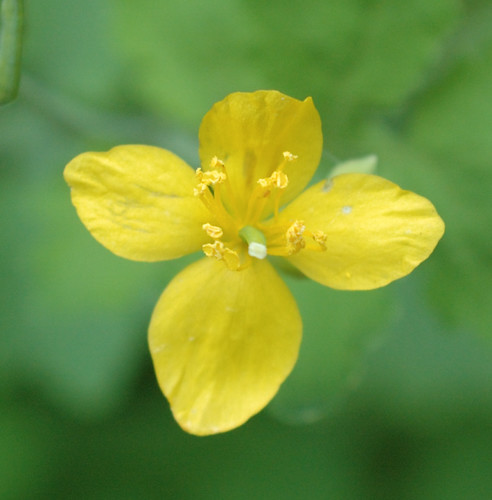
Chelidonium majus, Lesser Celandine, Detail of flower

The plan will create the first-ever official lists of invasive species, both plant and animal, and create the legal authority to enforce controls as state regulations.

h/t @BuggedDoc


Press Release

Monday, June 28, 2010
Contact: Jessica Ziehm
518-457-3136
jessica.ziehm@agmkt.state.ny.us

COUNCIL RELEASES PLAN TO COMBAT INVASIVE SPECIES IN NYS
Report Identifies New Process to Categorize Non-Native Invasive Species

The New York State Invasive Species Council today submitted its final report to Governor David A. Paterson and the State Legislature. The report, titled “A Regulatory System for Non-Native Species,” recommends giving the Council authority to develop regulations for a new process that will prevent the importation and/or release of non-native invasive species in New York’s waterways, forests and farmlands.

The report, prepared by the nine-agency Council and co-led by the Department of Agriculture and Markets and the Department of Environmental Conservation, introduces a new process for assessing each invasive species for its level of threat, its socioeconomic value, and for categorizing them into distinct lists for appropriate action.


State Agriculture Commissioner Patrick Hooker said, “In recent years, we have struggled with the economic and environmental impacts of non-native species such as Plum Pox Virus, Emerald Ash Borer and the Asian Longhorned Beetle, but we have also acknowledged the positive aspects associated with some, such as timothy, Norway maple and lady bugs. With the adoption of this report, New York will now have a process by which the merits of various invasive species will be evaluated and their level of harm and/or benefit will be reviewed to ensure unacceptable ecological or health risks are not purposefully introduced as pets, nursery stock, food or other uses.”

State Environmental Conservation Commissioner Pete Grannis said, “New York needs to take action now to curb the many pathways that invasive species use to make their way here. With this new regulatory approach, we can do just that. The system the Council is proposing strikes the right balance of minimizing the major threats to our ecology and economy while allowing for the careful use of those plants and animals that pose lower risks.”

The new assessment process would allow the state to categorize invasive species – such as zebra mussels, Sirex wood wasps and Eurasian milfoil – as “prohibited,” “regulated” or “unregulated.” As a result of this classification system, regulatory control where necessary, would help restrict movement of potentially harmful plants and animals.

Species in the “prohibited” category would be the most restricted as they pose clear risks to New York’s economic, ecological and public health interests, and, therefore, would be banned from commerce entirely. “Regulated” species would be restricted, but not prohibited from commerce, and require practical and meaningful regulatory programs. “Unregulated” species would be identified as those non-native species that do not pose a threat and therefore could be used freely in commerce.

Two “tools” would be used in assessing risks from non-native plants and animals. One evaluates the inherent, biological “invasiveness” of each species, i.e., some species are better “weeds” than others. The other tool looks at socio-economic values to help the Council decide whether the social benefits of a plant or animal outweigh the potential harm. For example, earthworms have often been shown to have positive effects on soil structure and fertility in agricultural and garden ecosystems; however, glacial ice sheets that covered most of New York some 11,000 to 14,000 years ago left New York worm free. Thus, today’s worms are actually European invaders and considered a non-native invasive species, but are clearly valuable.

The process of categorizing invasive species and other report recommendations were developed with the assistance of a 17-member steering committee comprised of representatives from state and federal agencies, conservation, academic and industry groups including agriculture, pets, nursery and landscape. In addition to Department of Environmental Conservation and Department of Agriculture and Markets, the Council is made up of the Commissioners of Transportation, Parks, Recreation and Historic Preservation, and Education; the Secretary of State; the Chairperson of the New York State Thruway Authority; the Director of the New York State Canal Corporation; and the Chairperson of the Adirondack Park Agency.

The New York State Invasive Species Council’s final report is available online at http://www.dec.ny.gov/animals/63402.html.

New York State is engaged in efforts to reduce the impacts of existing invasive species, such as the Asian Longhorned Beetle and most recently, the Emerald Ash Borer. Department of Agriculture and Markets’ horticultural inspectors have successfully treated 549,856 trees in Brooklyn, Queens and Staten Island as part of efforts to eradicate the Asian Longhorned Beetle and protect our forests and urban trees. The Emerald Ash Borer was found in Randolph, Cattaraugus County, in June 2009. The Departments of Environmental Conservation and Agriculture and Markets responded quickly and removed affected trees. Since that time over 387 compliance agreements have been written to prevent the human spread of the Emerald Ash Borer.


[goo.gl]

Related Content

My blog posts on invasive species

Links

New York State Invasive Species Council Releases Plan to Combat Invasive Species in New York State, Press Release, NYS Department Of Agriculture And Markets, 2010-06-28

Invasive Species List Report, NYS Department of Environmental Conservation
BBG Celebrates Native Plants Throughout July

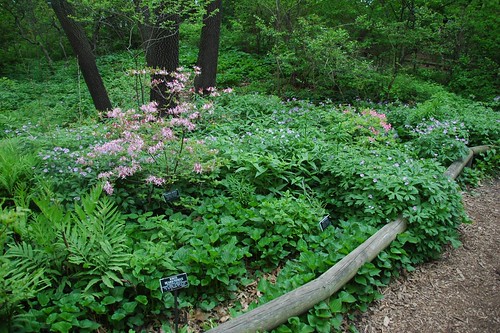
Native Rhododendrons blooming in BBG’s Native Flora Garden, May, 2009
Native Flora Garden


Press Release

Celebrating Our Backyard: Brooklyn Botanic Garden Presents Native Plant Month, July 2010

Brooklyn, NY—June 29, 2010—This spring, the results of a 20-year study of the flora of the New York metropolitan region by Brooklyn Botanic Garden (BBG) found many native species locally extinct or in precipitous decline. During the month of July, BBG will highlight the region’s native flora, displaying its beauty, explaining its importance, drawing attention to its plight, and providing simple ways to help in its restoration. BBG’s knowledgeable horticulturists and scientists will offer a behind-the-scenes look at the power of the native plant through field trips, workshops, and other insightful classes and lectures.

In 1911, the “Local Flora Section” was the first garden to open to the public at BBG. Since then, the Garden has maintained its commitment to the study and conservation of locally native plants, most recently through its multiyear New York Metropolitan Flora project (NYMF), in which nearly every species growing within a 50-mile radius of the city was cataloged and mapped. Many of the native plants in the study—which found a significant number of species in perilous decline—are propagated in the Native Flora Garden, as the Local Flora Section is known today, in an effort to conserve them.


JULY 2010: NATIVE PLANT MONTH PROGRAMMING AT BBG

TALK: Bringing Nature Home
Thursday, July 8 | 6:30 p.m.
With as many as 33,000 species imperiled in the U.S. alone, it is clear that citizens must change their approach to gardening and landscaping if they hope to share space with other living things. Join ecologist and author Doug Tallamy to learn about the key role native flora must play in the restoration of our landscapes. Only by supporting a large, healthy diversity of insects that coevolved with native plants can we keep herbivores in balance and gardens aesthetically pleasing. Fee required; advance registration is recommended but seats may be available at the door. Call 718-623-7220 or go to bbg.org/classregistration.

CURATOR’S TOUR: The Native Flora Garden with Uli Lorimer
Thursday, July 8 | 5–6 p.m.
Limited space: register now! Curator Uli Lorimer will lead this tour of BBG’s 99-year-old Native Flora Garden, which represents nine local plant communities, including the distinctive kettle pond and pine barrens habitats. Get behind-the-scenes insight into this extraordinary garden and how it has evolved since 1911. Learn about the visionary work of BBG’s founders in researching and documenting native plant life, both in the Garden and the greater metropolitan area. Fee and registration required; call 718-623-7220 or go to bbg.org/classregistration. Registration deadline: Wednesday, July 7.

FIELD TRIP: Native Plants and Restored Natural Areas: A Field Trip to Staten Island
Saturday, July 10 | 8:30 a.m.–2:30 p.m.

It turns out that the city’s smallest borough is big on natives! This day trip, led by restorationist Cindy Goulder, begins with a private guided tour of the Greenbelt Native Plant Center, the NYC Parks Department’s 13-acre nursery and greenhouses on Staten Island. See how hundreds of native plant species are propagated and grown from seed and learn principles underlying native plant cultivation. The Sweetbrook Stream and Wetland Restorations help recover the ecological health and function of urban waters, thanks to the indigenous wetland and upland plant species intentionally placed to increase local plant diversity and wildlife habitat. The Salt Marsh Restorations at Old Place Creek have reestablished many acres of tidal marshes after centuries of displacement by agricultural and industrial uses. Learn how invasive plants were removed and zones of marsh and maritime woody plants reintroduced to this estuarine community. Fee and registration required; call 718-623-7220 or go to bbg.org/classregistration. Registration deadline: Wednesday, July 7.

CLASS: Great Natives for Tough Places
Sunday, July 11 | 10 a.m.–12:30 p.m.
Discover how to turn tough urban spaces into a natural haven! This workshop, led by garden designer Joan McDonald and based on the BBG handbook Great Natives for Tough Places, identifies gardening challenges caused by city buildings, impermeable surfaces, rainwater runoff, construction, and other disturbances that compact and degrade soil. Students will explore solutions with five spectacular designs using unusual native plants chosen for their ability to thrive in urban environments. Students will receive a copy of Great Natives for Tough Places. Fee and registration required; call 718-623-7220 or go to bbg.org/classregistration. Registration deadline: Thursday, July 8.

WORKSHOP: Gardening with Native Plants
Tuesday, July 13 | 6–9 p.m.

Why are native plants important, and which ones are best for a garden? What does “native” really mean, anyway? Explore these questions with native plant authority Uli Lorimer, curator of BBG’s Native Flora Garden and learn how a garden can reflect the region’s—even a densely populated urban region’s—spectacular natural environment. Fee and registration required; call 718-623-7220 or go to bbg.org/classregistration. Registration deadline: Monday, July 12.

CLASS: Edible Native Plants in Brooklyn
Saturday, July 18 | 2–5 p.m.
Limited space: register now! Wild ginger, spicebush, fiddlehead ferns, wild leeks—these are just a few of the delicious vegetables and seasonings native to the region. Unlike conventional crops, many of the northeastern edible native plants are excellent for shade gardens, and most are perennials that will feed people year after year. Learn from local food specialist Leda Meredith which edible native plants will thrive in a garden and how to grow, harvest, and use them. Fee and registration required; call 718-623-7220 or go to bbg.org/classregistration. Registration deadline: Thursday, July 15.

Contact: Kate Blumm, Brooklyn Botanic Garden
718-623-7241 | kblumm@bbg.org


Prunus maritima, Beach Plum, blooming this past April in the Pine barrens section of BBG’s Native Flora Garden
Prunus maritima, Beach Plum, Native Flora Garden, Brooklyn Botanic Garden

[goo.gl]

Related Content

Where to begin?! Check out my Native Plants reference page, also available from the menu at the top of the blog.

June 16: Community Visioning Workshop for a new Communal Garden

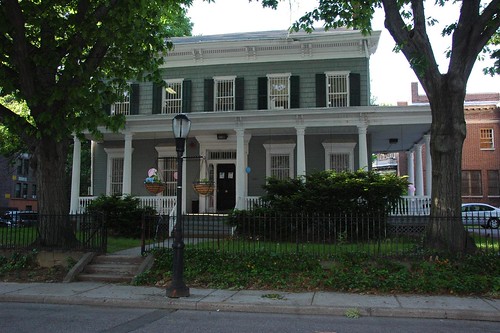
The Parsonage at the Flatbush Reformed Church is the proposed site for a new communal garden.
Parsonage


This Wednesday, June 16 at 6pm

Are you a gardener, or have you always wanted to get your hands in the dirt?
Sustainable Flatbush is collaborating with the Flatbush Reformed Church to create a new community garden!

Join us in a creative brainstorming session to plan this new neighborhood green space!

WHAT: Community Garden Visioning Meeting
WHEN: Wednesday June 16th at 6pm
WHERE: Flatbush Reformed Church, 890 Flatbush Avenue (at Church Ave.)

Refreshments and childcare will be provided!

What to expect at the meeting:

* see the garden location!
* contribute your ideas for what the garden will be
* what we can grow (flowers? herbs? vegetables?)
* how we can best use the space we have
* how we will build and maintain the garden
* learn how you can get involved!

Sign up here to attend a Visioning Meeting and keep up-to-date on news related to the garden.

For more information: 718-208-0575 / info@sustainableflatbush.org


Sustainable Flatbush brings neighbors together to mobilize, educate, and advocate for sustainable living in our Brooklyn neighborhood and beyond.

The Flatbush Reformed Church is a welcoming, inclusive and ecumenical Church located in the heart of Brooklyn.


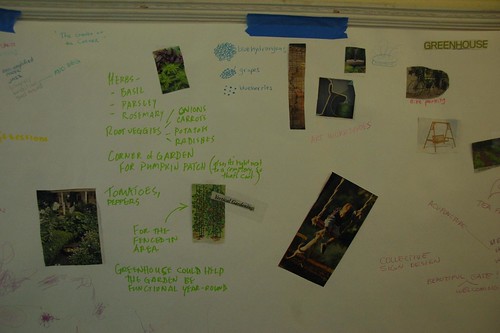
A section of the wall filled in by participants in the first Visioning Workshop on June 6.
Church Garden Visioning Workshop

Related Content

Help Envision a New Garden: Sunday, June 6, 2010-06-02

Links

New community garden — not at Brooklyn College, Helen Klein, Flatbush Life, 2010-06-08

Flatbush Reformed Church
Sustainable Flatbush
CAMBA
Flatbush Farm Share CSA

Recipe: Macerated Strawberries

I made this yesterday for dessert for the visit of a high school friend, whom I haven’t see in some decades. Sorry I didn’t take any pictures of this. Another time.

I got the original recipe from a Greenmarket flyer a couple of years ago. It’s one of my favorite ways to prepare strawberries. It’s a great cool dessert for hot summer days. It can also be prepared hours ahead of time, even the day before, then assembled just before serving.

Maceration is one of those cool, unusual words that sounds a little gross, but precisely describes what’s going on. It refers to the period of letting the strawberries soak with the vinegar-sugar mixture, which blends the flavors.

Ingredients

All these ingredients, except perhaps the vinegar, are available from Greenmarkets in New York City.

All measurements approximate. Any sugar can be used. Sweeten to taste, based on the ripeness of the strawberries.

  • 1 quart strawberries
  • 1 cup balsamic vinegar
  • 1/4 cup maple syrup
  • Spearmint leaves

Preparation

  1. Rinse the strawberries, drain and remove the tops. You can leave the strawberries whole, or cut them in half. Larger strawberries should be cut in half to ease mixing.
  2. Over low-medium heat, reduce the vinegar by about 1/2. You want to partly caramelize the sugars in the vinegar, but not burn it. When it starts to smell a little sweet, and thickens enough to begin to coat the sides of the pan, it’s ready.
  3. Dissolve your sugar – I used maple syrup – into the vinegar. Remove the vinegar-sugar mixture from the heat and set aside to cool.
  4. Finely mince most of the spearmint leaves. Set a few aside as a garnish.

Assembly

  1. Put the strawberries in a bowl with enough room that you can stir and mix them around.
  2. Pour the vinegar-sugar mixture over the strawberries. Add the minced spearmint leaves.
  3. Stir the mixture to coat all the strawberries. Don’t worry if there’s not enough liquid. The strawberries will add their own juices, increasing the volume of liquid, and make it easier.
  4. Cover the bowl and put it in the refrigerator to chill and soak for at least two hours.
  5. An hour in, stir the strawberries and juices again, coating all the strawberries with the juices, and return to the refrigerator to soak another hour.

Serving ideas

They’re delicious as-is. Wonderful with whipped cream. Pound cake or some other simple cake is good to soak up some of the juices. I served them up with some cinnamon coffee cake and an optional side of fresh whipped cream. Drizzle some of the juices over the assembly. Garnish with a spearmint leaf.

Got Snails?

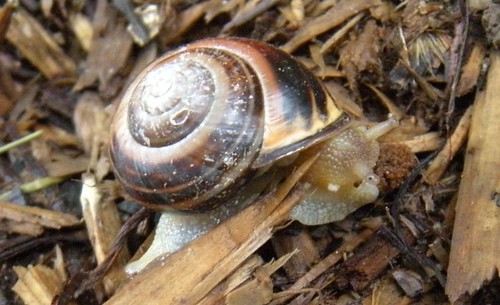
Garden Snail along the Shady Path, May 2010
Garden Snail

I was contacted on behalf of an urban nature educator who needs snails. She has a project this weekend on Governor’s Island to create snailariums. Who knew?! She got some snails, but not enough.

We are a neighborhood with a surfeit of snails. With yesterday’s rain, and more predicted today, it should be a good time to collect. If you’re interested in participating, see the original request from Wild Gotham Fran on the Brownstoner Garden Forum:

I am teaching a workshop at the Figment Arts Festival (6/11-13) on Governor’s Island on how to upcycle a shoebox into a posh house for a common garden snail. I am an urban nature educator and have a web show called Wild Gotham that focuses on everyday wildlife in NYC. If you have excess snails, I would love to come get them at your convenience or you could drop off at my house in Park Slope. Snails will be displayed at Figment and afterward released into my backyard where, along with all the others, they will devour my plants. Thank you in advance.- Fran

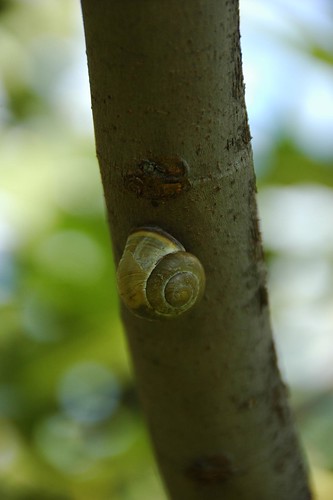
Tree Snail, Hattie Carthan Community Garden, Bed-Stuy, October 2008
Tree snail

Help Envision a New Garden: Sunday, June 6

Update: June 16: Community Visioning Workshop for a new Communal Garden

Update, 2010.06.04: Added information about the site.
Update, 2010.06.03: Added registration link.


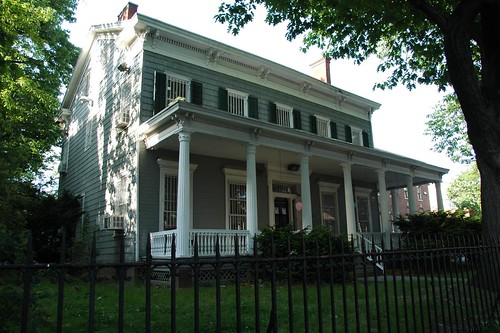
The Parsonage, Flatbush Reformed Church, 2103 Kenmore Terrace, corner of East 21st Street, Flatbush, Brooklyn
Parsonage
Thus Sunday, June 6, from 4-6pm, we’ll be holding the first of two Community Visioning Workshops for a new communal garden on the grounds of the landmarked Flatbush Reformed Church. One site is a small, fenced-off area. The other is the front lawn of the Parsonage. This landmarked historic building was built in 1853 – though portions of it may be even older – and moved to this site in 1913.

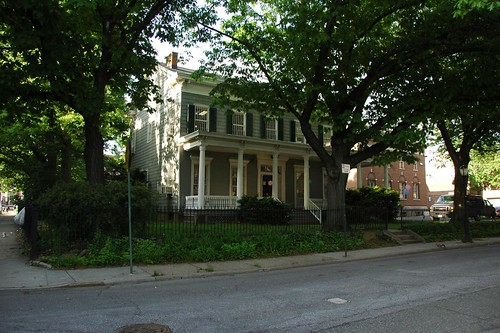
Front lawn, looking east from East 21st Street
Parsonage

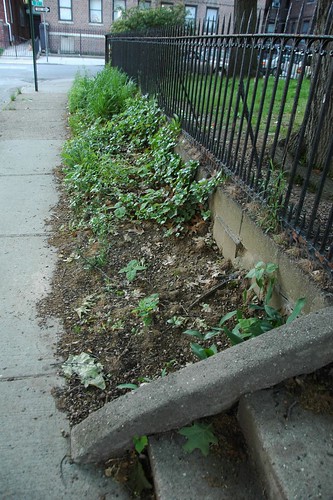
The main area is the front lawn of the Parsonage. It’s a large area, about 25-feet deep, from the fence along Kenmore Terrace to the porch of the house, and about 85-feet long, from East 21st Street to the Church parking lot. There are opportunities to further develop the buffer plantings, 3-1/2-feet between the fence and the sidewalk, that Church members have already established.

Buffer Plantings, looking from the entrance gate toward East 21st Street
Flatbush Reformed Church

The site is dominated by large, mature Oak trees lining the fence on Kenmore Terrace and East 21st Street. These cast dense shade, and working with this constraint will be one of the challenges for designing the garden and plantings. I have a lot of experience with urban shade gardens, and see the potential in this site.

Parsonage

The most interesting aspects of this project will be the community partnerships. CAMBA, a large community-based service organization, has a young mothers program that meets at the Parsonage. We want the space and gardens to be child-friendly, and provide opportunities for exploration and learning about nature and gardening. The Flatbush Farm Share CSA distributes from the front lawn of the Parsonage. They offer shares for all income levels, and subsidize low-income members. We want to accommodate their needs for space and provide opportunities for education programs.

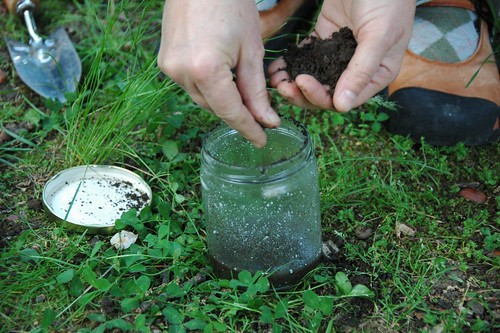
Soil Sampling for Texture Analysis
Soil Sampling

Press Release

Sustainable Flatbush is partnering with the Flatbush Reformed Church to create a new community garden! The whole community is invited to be involved in the planning and care of this neighborhood green space.

Two Community Garden Visioning Meetings have been scheduled for Sunday June 6th and Wednesday June 16th. At these brainstorming sessions community members will visit the garden area, located on church grounds, and work collaboratively to envision this new public green space: what can be grown, how to best utilize the space, how the garden will be built and maintained, what to name the garden, and how to be a part of it!

The new community garden is a joint project of Sustainable Flatbush’s Urban Gardens & Farms Initiative and the Flatbush Reformed Church.

The Urban Gardening and Farming Initiative works to foster community gardening efforts in Flatbush, promoting healthy local food, sustainable horticulture practices, and community building and beautification.

Sustainable Flatbush brings neighbors together to mobilize, educate, and advocate for sustainable living in our Brooklyn neighborhood and beyond.

Flatbush Reformed Church is a welcoming, inclusive and ecumenical Church in the heart of Brooklyn.

WHAT: Community Garden Visioning Meetings
WHEN: Sunday, June 6th at 4pm and Wednesday, June 16th at 6pm.
WHERE: Flatbush Reformed Church, located at 890 Flatbush Avenue at Church Avenue, just three blocks east of the Q train or three blocks west of the 2 train, Church Avenue stop.

Sign up here to attend a Visioning Meeting.

Refreshments and childcare will be provided.

Parsonage

Related Content

Flickr photo set

Links

New Community Garden at Flatbush Reformed Church!, Sustainable Flatbush, 2010-05-31

Flatbush Reformed Church
CAMBA
Flatbush Farm Share CSA